
Cleaning is the most common reason for tenancy deposit deductions in England. The good news is that it is also the easiest to prevent. This guide explains how deposits are protected, what a landlord can deduct, and what to do if you disagree.
How your deposit is protected
For an assured shorthold tenancy in England, your landlord or agent must protect your deposit in a government-approved scheme within 30 days of receiving it, and give you the prescribed information about the scheme. The three schemes are:
- Deposit Protection Service (DPS)
- Tenancy Deposit Scheme (TDS)
- mydeposits
Each scheme offers a free dispute resolution service if you and your landlord cannot agree on deductions.
What a landlord can deduct for cleaning
A landlord can deduct the reasonable cost of returning the property to the standard of cleanliness recorded at check-in. They cannot use your deposit to make the property cleaner than it was when you moved in, and they cannot charge for fair wear and tear.
Fair wear and tear vs dirt
Fair wear and tear is the natural deterioration that comes from normal use: slightly worn carpet in a hallway, faded paint, minor scuffs. Dirt is not wear and tear. Grease in the oven, limescale on the shower screen, dust on skirting boards and stains on carpets are all cleaning issues that can be deducted for.
Your step-by-step plan
- Find your check-in inventory. It sets the standard you need to meet. If it shows the oven was professionally cleaned, yours needs to be too.
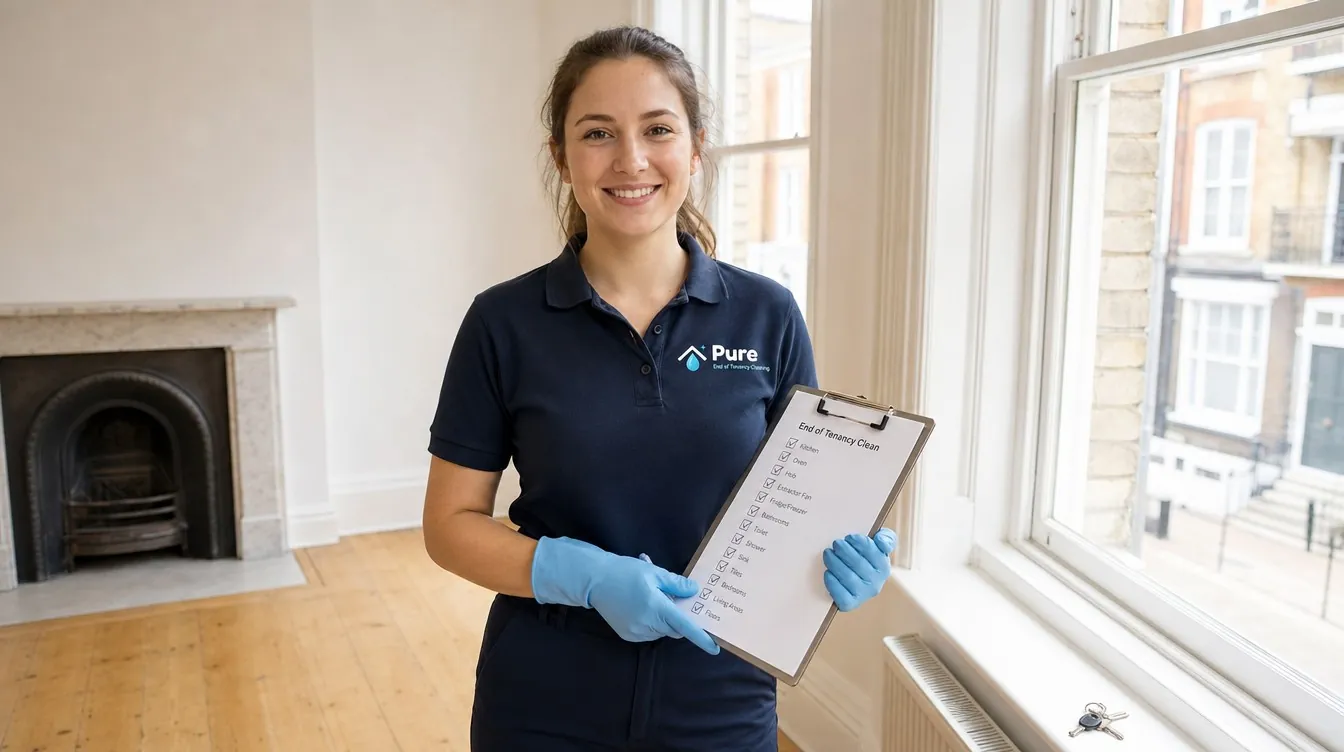
- Clean against the inventory. Use our end of tenancy cleaning checklist or book a professional clean.
- Take dated photos and video of every room after the clean, including inside the oven, fridge and cupboards.
- Keep receipts for any professional cleaning.
- Attend the check-out if you can, or ask for a copy of the check-out report.
- Ask for the return of your deposit in writing once the tenancy ends.
If you disagree with a deduction
First, ask the landlord or agent for a breakdown with evidence: photos, the check-out report and quotes or invoices for the cleaning. Compare it with the check-in report. If you still disagree, you can raise a dispute with the deposit scheme. The adjudicator looks at the evidence from both sides, especially the check-in and check-out reports and photographs.
Where a professional clean helps
A professional end of tenancy clean, with a receipt and a re-clean guarantee, is strong evidence that you returned the property clean. If the agent flags something we cleaned within 48 hours, we come back and re-clean it, which often resolves the issue before it becomes a deduction. See our guarantee.